Return to the Land of a Thousand Hills

Dec 17, 2024
10 min read
Updated: Jan 8, 2025

Between November 28 and December 9, 2024, I traveled to Kigali, Rwanda, to visit and teach an allergy and immunology boot camp at the University of Rwanda. This was my second visit to Kigali. My first visit in 2023 lasted a month and gave me the opportunity to make wonderful friends, explore local attractions, and immerse myself in the vibrant culture. During that visit, I completed a rotation at Rwanda Military Hospital, where I gained firsthand insights into atopic conditions within the Rwandan context. Together with Dr. Ghislaine Isabwe, we conducted the inaugural adult allergy and immunology boot camp at Centre Hospitalier Universitaire de Kigali (CHUK)—a collaboration between McGill University and the University of Rwanda. The participants included residents in internal medicine, dermatology, emergency medicine, and ENT. The overwhelmingly positive feedback from those sessions laid the foundation for this follow-up visit.

I arrived late on Friday, November 29, and was welcomed once again by the sights and smells of Kigali—the earthy red dust, the motorbike taxis with passengers in red helmets, and the rolling hills. The fresh local produce was abundant, with cassava leaves, yams, plantains, mango, and the small bananas that stood out for their flavour. We spent the weekend acclimatising and making final preparations for the week ahead.
Part 1: Allergy and Immunology Bootcamp
The Allergy and Immunology Bootcamp is designed to address the growing burden of allergic and immunologic diseases in Rwanda. By providing targeted education at the residency level, the program aims to equip future consultants with the skills to recognize and manage these conditions effectively, while inspiring them to pursue further training and contribute to advancing the field of allergy and immunology.
Rising Disease Burden:
Asthma is the most common non-communicable disease (NCD) affecting children and adolescents in Africa.
By 2030, NCDs are expected to surpass infectious diseases as the leading cause of illness and death across the continent.
Despite its high prevalence, asthma often remains underdiagnosed, contributing to significant morbidity and mortality. During last year’s boot camp, one of the internal medicine residents shared that he encountered an average of three poorly controlled asthma cases per week in his emergency room rotations, many severe enough to require intubation.
Several factors exacerbate asthma outcomes, including poverty, environmental exposures, and societal stigma. Pollution is a growing concern, with Africa experiencing some of the worst air quality and severe consequences in the world.
Access to medications and cost are significant challenges. During my rotation in 2023, I routinely saw patients prescribed a one-month supply of Ventolin alongside a limited prescription of cetirizine for allergic asthma.
Growing Allergic Conditions
Food allergies in Africa are an emerging health concern but remain underreported and underdiagnosed. While recent data suggest prevalence may be higher than previously assumed and comparable to Western countries, the methods used to collect this data have been heterogeneous, making it difficult to draw definitive conclusions.
Common allergens include cow’s milk, peanuts, eggs, tree nuts, fish, and shellfish. In South Africa, studies have reported significant peanut allergy rates among children with atopic dermatitis, showing variation across ethnic groups (e.g., 15% in Xhosa children and 38% in mixed-race children).
No comprehensive data is currently available for Rwanda. During our own boot camp, anecdotal evidence suggested allergies to milk and groundnuts. The residents also shared cases of urticaria that were mistaken for food allergies.
Lack of Data:
There is a critical lack of comprehensive epidemiological studies on food allergies and other atopic conditions in Africa.
Limited diagnostic resources and cultural factors influencing the reporting of allergic symptoms further obscure the true burden.
Call to Action
Establishing a locally developed registry is essential. This registry would document the prevalence, triggers, and outcomes of allergic conditions across different regions, providing valuable insights into patterns such as common allergens (e.g., dust mites, pollens, groundnuts, cow’s milk) and environmental contributors like urbanization, pollution, and climate change.
Building local capacity through healthcare training programs is crucial for improving the diagnosis and management of atopy. Empowering physicians to implement context-specific strategies can help reduce the burden of allergic diseases and foster self-reliant healthcare systems tailored to the needs of their communities.
Monday, December 2
We met our eighteen highly motivated residents, facilitated by the leadership of internal medicine resident Dr Germaine Dushimimana. The day’s lectures covered:
Introduction to allergy and immunology
Allergic rhinoconjunctivitis and chronic rhinosinusitis
Asthma and pulmonary function testing
Aeroallergen immunotherapy and biologics
Hymenoptera allergies and immunotherapy
Tuesday, December 3
The highlight of the day came during a break between lectures when we celebrated Dr. Germaine’s birthday. After a session on food allergy and oral immunotherapy (OIT), we arranged for a 2kg cake to be delivered to campus by motorbike - a common form of transport. Thankfully, no one was allergic to dairy, wheat, or egg!
The day continued with:
Drug allergy
Skin prick testing demonstration

We used extracts brought from home, including pollens, grasses, molds, dust mites, cockroach extracts, and common food allergens like cow’s milk, wheat, fish, and nuts. Unsurprisingly to me, many residents discovered they had positive reactions to dust mite allergens.
Wednesday, December 4
We started with a simulated case-based practice on inpatient penicillin allergy management, followed by lectures:
Atopic dermatitis
Urticaria
Mast cell disorders
Eosinophilia and eosinophilic esophagitis
Practical sessions on food allergy and anaphylaxis management.
Thursday, December 5
Thursday focused on clinical immunology, beginning on an introduction then moving towards practical applications.
Primary immunodeficiency (PID), such as severe combined immunodeficiency or common variable immunodeficiency can present as syndromic features, atopy, autoimmunity, or even cancer. The importance of awareness and early recognition was a recurring theme.
Secondary Immunodeficiency, While HIV is the most recognized cause, we explored other contributors, such as medication effects, malnutrition, chronic disease, and environmental factors.
Case-based practices on angioedema and asthma/PFT interpretation.
Friday December 6
Friday began with a case-based session on PID and a lively question and answer period. We then conducted the final exam before celebrating the conclusion of the course. To mark the end, we visited Marietta Restaurant, a local eatery where we enjoyed a buffet for 4,000 Rwandan Francs (approximately $4.09 CAD or $2.89 USD). It was the fitting way to end an enriching and rewarding week.
Working with the residents was inspiring because of their hardworking attitude and dedication towards serving through their profession. With the boot camp successfully completed, I had some time to reconnect with old friends and enjoy a bit of what Rwanda had to offer.
Part 2: Revisiting People and Places
During my visit, I reconnected with some of my old friends who were instrumental in making my previous stay so enjoyable. Their warmth and hospitality helped me feel welcome and brought a sense of familiarity to Rwanda once again.
Handicrafts shopping
Shalum Azaza, young woman with a background in tourism and hospitality management, carries bright aspirations for the future. Last year, she took me on a personal guided tour of the Kigali Genocide Memorial and the Museum for Campaign Against Genocide, offering deep and thoughtful insights into this profoundly tragic chapter of history.
This time, we explored Remera Market, a vibrant local market known for its handicrafts. Together, we wandered through stalls overflowing with handmade treasures, including handwoven baskets, intricate beaded earrings, Imigongo (a traditional art form using cow dung mixed with ash and clay and molded into geometric shapes), a local drum, and beaded sandals. The sheer variety and creativity on display was overwhelming, making it hard to decide what to purchase. We finally settled on one shop where the owner enthusiastically explained the craftsmanship while switching between English, French, and Kinyarwanda.
Cell group evening
One afternoon, I made my way to Kanombe, the area where I had stayed during my previous visit. Navigating Kigali can be a challenge, especially for the uninitiated. While the city’s road system may appear disorganized at first glance, it follows its own internal logic. Traffic congestion is a frequent, everyday occurrence, and the road numbering system can be extremely confusing.
To get to my destination, I opted for a moto taxi. At first glance, they seem perilous. The bikes zip between cars, climbing steep inclines, and navigate over speed bumps, sometimes on unpaved dirt roads. However, Rwanda’s moto taxis are more regulated and somewhat safer compared to those in many other African countries. They are also significantly more affordable compared to a cab; my ride from Remera to Kanombe cost just 1,500 RWF.
Riding one takes some getting used to. I tightly gripped the handles located at the back to keep my balance. Meanwhile, local Rwandans casually checked their phones, folded their arms without support, or even balanced heavy objects. I once saw someone riding with an office chair balanced upside down on his head!
Kanombe, a suburb in the eastern part of Kigali, lies just beyond the airport. Returning to the city later that evening proved more challenging. I took a cab, and the journey back took nearly an hour as we navigated the dark, winding roads. Many houses are unmarked or unnumbered, so finding specific locations often depends heavily on landmarks or local memory—neither of which I had mastered yet.
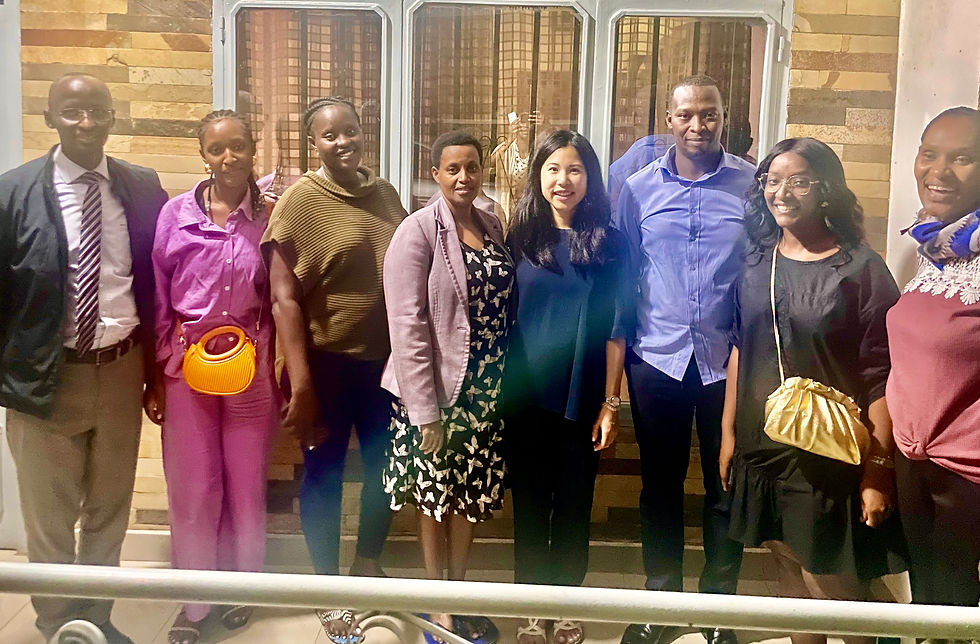
The visit was worth it. I reconnected with my wonderful hosts Genevieve and Gilbert, who welcomed me with warm hospitality and a comforting snack of hot milk, fresh mini bananas, and mandazi (fried donut). During our cell group gathering, the members discussed their initiative to support the less fortunate this Christmas with practical gifts.
Remembering hospitality

I also had a brief but meaningful visit with Arcel Ruhato, one of the partners of Nova Health and Wellness Alliance. His new facility has hosted several foreign visiting teams traveling to Rwanda over the years. Arcel went out of his way to make my previous stay incredibly smooth. He personally picked me up from the airport, ensured I had food in the fridge after an exhausting 18-hour flight, and arranged transport for the one-hour journey into the city and back to Kanombe during last year’s boot camp. He also helped me organize some tourism activities to have a memorable stay.
Outdoor adventures
On Saturday, I met up with Protais Seshaba and his fiancée, Seraphine. Protais is an experienced tour guide who has worked extensively with both locals and international visitors. He has also successfully run his own tour business in Rwanda.
Last year, he guided us on a visit to Volcanoes National Park. The day began early at 4 a.m. with a three-hour drive to the park's base, where we started our trek into the protected area. The hike, reaching an elevation of 3,600 meters, was challenging, with steep and slippery terrain that required endurance and focus. On the way back, the safari vehicle encountered mechanical issues while navigating the rugged roads, which delayed our return until midnight. Despite the setback, the experience was memorable and remains a highlight of my time in Rwanda.
This time, we visited Fazenda Sengha, a scenic outdoor recreational center. We ventured on a hike around the back of the property, where the landscape transitioned into more rural areas. We passed a farmer tending his goats, curious children waving as we walked by, and even spotted monkeys darting along the road. After the hike, we returned to the property and visited the juice bar. I chose a refreshing mix of beet, pineapple, ginger, and lime to energize myself after the walk. The afternoon ended with a reflective moto ride home under a pink and blue sunset.
Coffee and Connections
On Sunday morning, I had a brief meeting with Dr Prosper Ingabire, the former chief resident from last year’s boot camp. He is now a staff internist with ambitious dreams of becoming an academic physician and specializing as a respirologist.
On Sunday afternoon, I caught up with Sylvia Twahirwa, who works with Kivu Noir, a coffee-focused social enterprise that connects farmers directly with customers. Their proceeds go toward providing free education and nursery schools for farmers' children, helping to build up the next generation. Last year, I visited their first café at Norrsken Kigali House, a co-working space designed to foster technology and impact entrepreneurship. I enjoyed exploring the co-working areas, from cozy sofas surrounded by handwoven Rwandan mats to tranquil outdoor seating in the garden. In the evenings, the space transforms into a vibrant hub with live music, bringing people together. Since then, Kivu Noir has opened a new café, which I was unfortunately unable to visit. Instead, Sylvia and I stopped by the local Simba Supermarket, where we emptied their shelves of Kinunu coffee.
Concluding thoughts

On Sunday evening, I made my way to the airport for the long flight back home, reflecting on nine fruitful days. Everyone I connected with left a lasting impression through their warmth, hospitality, and willingness to go above and beyond. In their own unique ways, each person acted as an ambassador of their country, embodying the resilience, spirit, and progress that define Rwanda. As I boarded my flight, I carried with me fond memories and appreciation for the connections I made. It is only a matter of time until I return, but until then, I will hold on to these memories and the lessons they’ve left me with.
Acknowledgments
I would like to express my gratitude to the following individuals and organizations who helped make this trip possible:
Dr Adhora Mir (Allergy/Immunology Fellow-in-Training, McGill University) and Dr Mehr Shah (Allergy/Immunology Fellow-in-Training, Washington University in St. Louis) – for their invaluable assistance in preparing the teaching material for the boot camp.
Dr Ghislaine Isabwe and the Isabwe Family – for their generous hospitality and for hosting me during my stay in Rwanda.
University of Rwanda College of Medicine and Health Scienes – for facilitating the academic portion of the trip and enabling meaningful engagement with the residents.
Your support and contributions were vital to the success of this experience.
References
Global Asthma Network. Country reports from Africa. The Global Asthma Report 2022. Available from: https://globalasthmareport.org/regions/africa.php
Health Effects Institute. Air pollution and health impacts in Africa. State of Global Air. Published 2019. Available from: https://www.stateofglobalair.org/resources/africa
Faniyi AA, Okesanya OJ, Nukpezah RN, Ibiwoye DO, Eshun G, Adigun OA, et al. Addressing the asthma crisis in Africa: challenges, strategies, and recommendations for improved management. Egypt J Intern Med. 2024;36(76). Available from: https://ejim.springeropen.com/articles/10.1186/s43162-024-00340-6
Kirenga BJ, Chakaya J, Yimer G, de Jong C, Kamya M, van der Molen T. The burden of severe asthma in sub-Saharan Africa: Findings from the African Severe Asthma Project. JACI Glob. 2024;3(2):100209. Available from: https://www.jaci-global.org/article/S2772-8293(24)00005-5/fulltext
Leung ASY, Wong GWK, Tang MLK. Food allergy in the developing world. J Allergy Clin Immunol. 2018;141(1):76-78.e1. Available from: https://www.jacionline.org/article/S0091-6749(17)31812-2/fulltext
Kung SJ, Steenhoff AP, Gray C. Food allergy in Africa: myth or reality? Clin Rev Allergy Immunol. 2014;46(3):241-249. doi:10.1007/s12016-012-8341-z. Available from: https://pubmed.ncbi.nlm.nih.gov/23179518/
Ndjindji OM, Siawaya JFD. Mapping allergic diseases in sub-Saharan Africa. Front Allergy. 2022;3:850291. Available from: https://doi.org/10.3389/falgy.2022.850291
El-Gamal YM, Hossny EM, Reda SM, El-Sayed ZA. Allergy and immunology in Africa: Challenges and unmet needs. J Allergy Clin Immunol. 2017;140(5):1240-1243. Available from: https://www.jacionline.org/article/S0091-6749(17)31508-7/fulltext


Well done Michelle