Chisasibi: Where the Work is Shared

Mar 3
11 min read
Monday, February 23, 2026
We arrived at the Air Creebec terminal just after 07h15 for the 08h15 flight. Weight limits are strict on these routes, and we were travelling with more than clothes. The cooler was packed tightly with pre planned meals, medical supplies, allergy testing reagents, and a cake I had baked for Eileen Coonishish, a colleague on the territory. I carried the cake base with strawberries and whipping cream, planning to assemble it there.
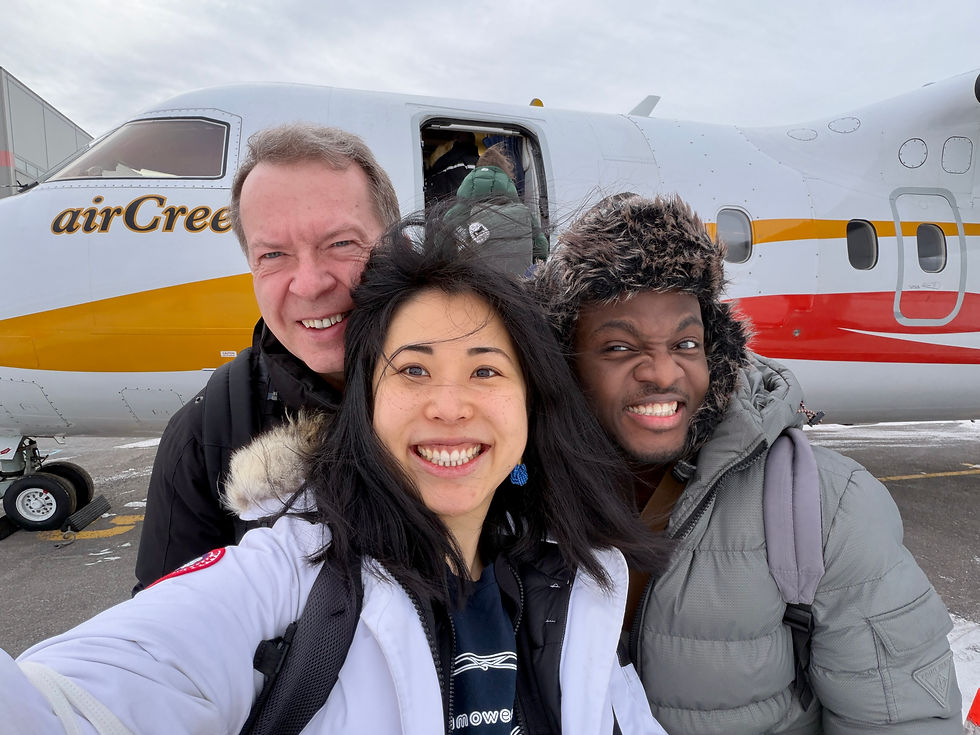
Dr Christian Pineau, a rheumatologist, was joining for his first trip north. We had been planning this visit for months with Specialized Services, clarifying scope, documentation access, clinic logistics, and medication availability. The rheumatology waitlist had been reviewed in advance so the week would be realistic.
David Delva, from the leadership of Specialized Services, had been central to much of this coordination. He was joining us for the first three days of our trip. He was given only a week and a half notice to come north.
We were told there would be a delay due to a technical issue and that boarding might be later than planned. Eventually we took off, and as I began to fall asleep, I was woken up by the intercom.
We would be returning to Montréal for an emergency landing.
The flight attendant began reading emergency procedures off a script.
“Urgence. Restez penchés. Emergency. Bend down, head down.”
I pressed my head to my knees. There was no time to negotiate emotion. I followed instructions and waited.
We landed to ambulances and fire trucks lining the tarmac. It was the same propeller issue that had delayed us earlier.
Back in the waiting area, the day shifted into uncertainty. Chris checked his phone. I opened my laptop and began answering emails. David was already on Teams with Specialized Services, giving point by point updates. Patients were rescheduled in real time.
We were told our flight would be delayed until 11h00, then 13h15. At 12h45 we were suddenly told to board within five minutes.
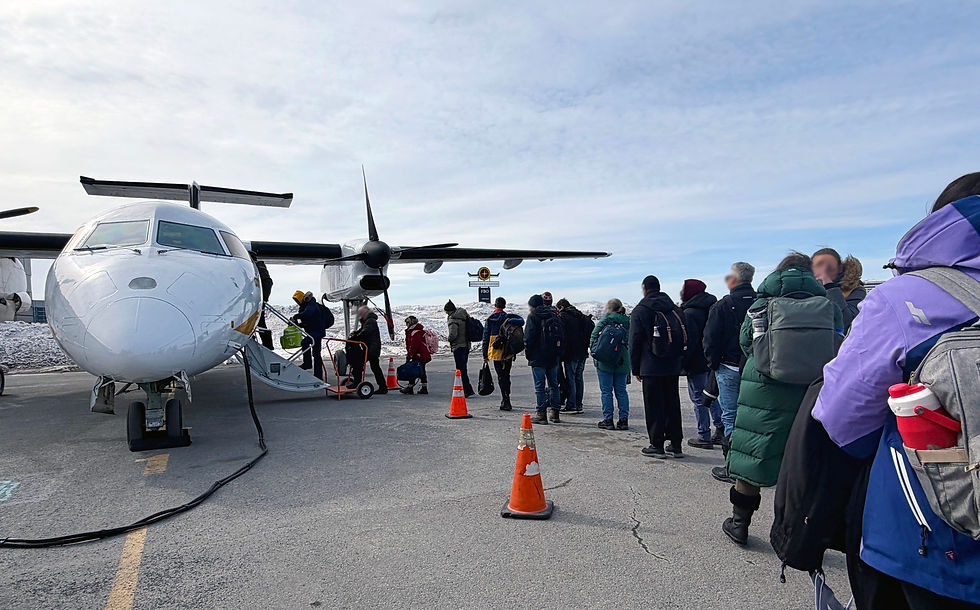
David mentioned that this was why he sometimes chose to drive seventeen hours north instead of flying. He described how the route Google Maps suggested was not the one Cree colleagues recommended. He spoke about a fatal accident on what had once been considered a shorter path, and about another vehicle that had been totalled. Risk did not feel exceptional in those stories. It was simply part of the landscape.
The second flight was smoother. We stopped in Chibougamau and Wemindji before descending into Chisasibi. Dark trees traced the edges of frozen rivers below.
Marie-Ève Manseau, a nurse from Specialized Services, was there to pick us up. The trunk would not open properly, so we shifted the cooler and equipment behind the back seat. Standing in the open air, I felt the cold cut through my jeans.

We went directly to the Specialized Services trailer behind the hospital, where medications had been organized, rooms set up, and patient lists printed. The weeks of preparation became visible in concrete ways.
Eileen stopped by briefly to greet us before heading home to prepare dinner for her family. “Call me once you’re ready to be picked up,” she said.
By early evening we were at the hotel. We walked downstairs to the Northern to pick up a few additional items and reacquaint ourselves with northern prices. Dinner was simple. Cheese and crackers, then tuna tataki with soba and napa cabbage.
David stopped by the kitchen to check on us. He shared more of his story, beginning as a préposé, moving into ICU, then building a career in the North. He spoke about translating realities for physicians in the south and helping visiting specialists adjust. Listening to him, I was reminded that I arrive into systems sustained long before I step off the plane.
Tuesday 24 February
At 08h30 I met with Valerie D, the nurse who would be assisting me all week. She had never worked alongside an allergist before, so we reviewed the list carefully and discussed how the day might unfold.
We had two rooms. One was mine for consultations, and the other was dedicated to vitals, drug challenges, and emergency medications, carefully laid out in advance. My room was stocked with everything I had requested and more. Even with that preparation, there were still items I had not anticipated. Valerie moved quickly throughout the morning, retrieving what was missing without hesitation.
One vaccine allergy patient had been on our radar for months. She had previously been assessed at a francophone hospital ten hours away by road. I had requested her notes in advance. Emails had gone back and forth about available vaccines and testable components. When I entered the clinic room, the printed chart and our correspondence were waiting for me. The groundwork had already been done.
There were a few no shows, likely because of the weather. A handwritten sign in the kitchen reminded staff to leave the tap running overnight so the pipes would not freeze.
One drug challenge finished just at noon. With fifteen minutes to spare, I stepped outside. It was close to -28°C. The sky was intensely blue, and the air was crisp. Snowbanks rose more than twice my height. Then, I returned to the trailer to begin a busy afternoon.

Our complex vaccine patient arrived after driving five hours. She and her husband would drive five hours back the same day. Given the distance and uncertainty, we decided together to proceed only with intradermal testing and defer drug challenges until my next visit.
Several pediatric patients followed, most for food allergy. There was careful counselling about label reading and unknown ingredients. Food insecurity feels different when options themselves are limited.

Mid-afternoon, I brought out the cake. While we had been sitting in the airport during yesterday’s delay, we realized we had forgotten to pack a whisk. I mentioned it to David. By the time we arrived, Valerie had found a hand mixer. I assembled the cake the night before and hid it in the clinic fridge.
When we cut it, staff gathered briefly to each enjoy a slice. It was a joyful interruption in a full day. I had carried the cake north, but many others had made it possible to serve.
By the end of clinic, I stayed to complete notes and reset the space.
Dinner that night was simple again. Cheese, nuts, and crackers, then gnocchi with portobello mushrooms in tomato sauce.
Wednesday 25 February

I met Valerie at 08h45 to review the list. She had brought paper plates, disposable cutlery, and cups so we could run food challenges more easily. The day already felt more coordinated.
For one patient, another allergist had previously assessed her by telemedicine through Montréal and offered in-person skin testing with a possible hazelnut challenge there. She was unable to go and was seen in clinic with me instead. I sent her sister to buy Nutella while I performed skin testing. Hazelnut was positive, so we did not proceed with the challenge. I apologized for the unnecessary errand. She shrugged and said the other sister wanted it anyway.
Another child was hesitant about trying egg. I ran through the clinic looking for ketchup to make it more palatable. No one had any. We worked slowly with small bites.
When I asked whether she had eaten breakfast, her mother told me they had driven three hours from Wemindji and would continue to Val d’Or, another ten hours, for an appointment the next day.
The clinic wifi was unreliable, so I had been using my phone as a hotspot. While reviewing labs with the next patient, the platform stalled. I had slipped my phone into my pocket while running around the clinic looking for ketchup, and the connection dropped. I restored the hotspot, but the jeton virtuel had expired. I spent nearly twenty minutes trying to log back in and searching through email for the lab results before realizing what had happened. David and Valerie immediately offered to switch computers or look things up on theirs. In the meantime, I reviewed the copy of the labs that had been sent previously and continued the discussion. The patient was remarkably understanding.
At least we have an electronic medical record now. On my last trip, finishing late meant pushing a wheelbarrow of paper charts from the trailer into the main hospital archives.
At 12h00 we paused for a Lunch and Learn that we had planned. Pizza was shared around the table. I spoke briefly about allergy practice in this setting and then asked what the priorities were from their perspective. One mentioned teachers navigating food allergies in classrooms. Another spoke about allergies to fish, a food that is an important part of Cree cuisine and culture. We discussed ways to connect the community with existing educational resources, and how those might be adapted in a way that makes sense here.
Chris explained rheumatology in simple terms and answered practical questions. How long is the wait. Do patients drive or fly. What happens if they cannot stay overnight.
In the afternoon I advanced one child’s egg ladder with waffles and chocolate syrup. For an almond challenge, I mixed almond into vanilla pudding. I sometimes think my work involves persuading children to eat party food under supervision.
Prior to the trip, I had messaged Eileen about fish and caribou. She said she would try during a weekend stay at camp, but the caribou had already moved on. Later she wrote that someone was willing to sell white fish, though it had not been cleaned. I wanted it, even though I did not know how to prepare it.
That evening Chris and I were in the hotel kitchen eating grilled eel with stir fried vegetables and Japanese rice when I received a text. Her son was waiting at the entrance of the commercial building with it.
Eileen was midway through a ten-hour drive but still arranged the delivery. It was frozen, tucked inside a paper bag. I carried it upstairs and placed it in the freezer.
Thursday, February 26, 2026
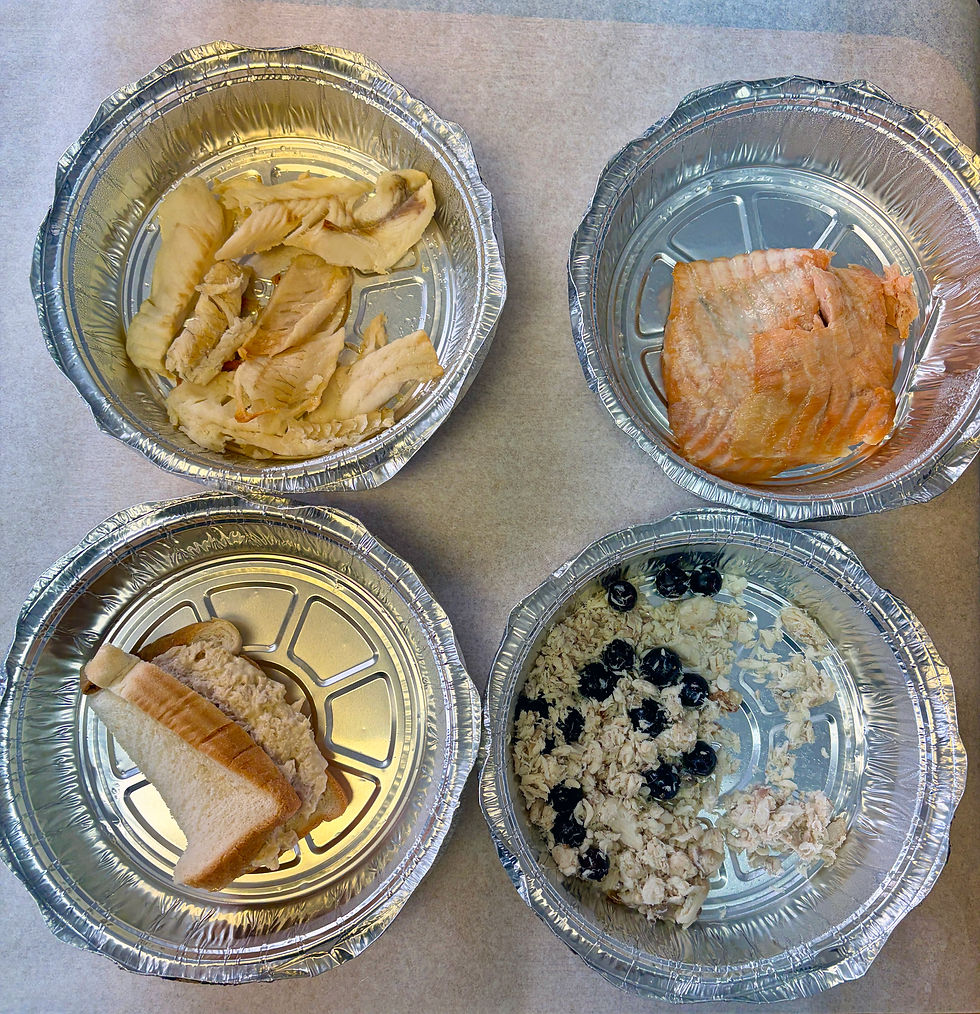
The morning began with fish.
A patient I was seeing for the first time arrived with four types: walleye caught by a relative, white fish traditionally mixed with berries, store-bought salmon, and a tuna sandwich. We joked that we were hosting a fish party. She explained that the white fish is usually mixed with bear grease and served as dessert, but for testing we kept it as pure as possible.
She did react during the fish food challenge, but it was managed safely. Afterward, she insisted we keep the remaining fish, which Chris and I enjoyed for lunch.
During earlier telemedicine visits, I had been using a downloaded ImmunoCAP requisition form from my clinic, adapted by a colleague to match the receiving hospital’s requirements. He had asked why I was sending separate PDFs. Within a day, that same form was integrated directly into the MYLE platform used on territory. It felt like progress.
I ordered ImmunoCAP and component testing through the platform and told Valerie we would need three tubes. She went to the lab to confirm the requirements and returned to say that because the samples were being flown to two hospitals in different cities, seven tubes were required instead. The patient had already left for another part of town and had to return.
When she came back, we discovered that although the requisition was now integrated into MYLE, it did not translate cleanly into the printed labels required by the lab. Everything had to be rewritten by hand. We agreed the process needed review and planned to debrief with the assistant head nurses later. Valerie said she would look at it even when she was off territory, and I offered to revisit it on another day down south.
The clinic was busy enough that I worked through lunch to complete my notes. Meanwhile, Chris had several cancellations. One patient had gone hunting. Another was late, driving five hours to get there. He used the time to do a home visit for someone too weak to come in.
After work, we stepped outside for a short walk. Back at the motel, we marked Lunar New Year with pan fried dumplings, spinach stir fried with fermented bean curd, and pineapple tarts from Singapore.
Friday, 27 February 2026
That morning, as I began reviewing the patient list with Valerie, I was interrupted by a surprise. Cherubine Martin, who helps coordinate patients at the front desk, had made bannock for us. I had messaged Eileen the night before asking where I might find some, and she had arranged for it to be made fresh. I felt looked after.
The half-day clinic was extremely busy with drug challenges and food allergy evaluations. I worked through lunch again to finish my notes.
Helen Napash, also part of the front desk team, surprised me with caribou meat. I had been asking about it all week. She explained that her husband had hunted one recently, skinned it, and divided it among families. She still had some leftover in the freezer, which I received with gratitude.
Before packing up, Valerie and I debriefed. Attendance over the past three and a half days had been strong. We discussed what we could optimize for the next visit and for telemedicine clinics. It felt like genuine teamwork. I was grateful for her years of experience and her willingness to do whatever was needed for the patients.
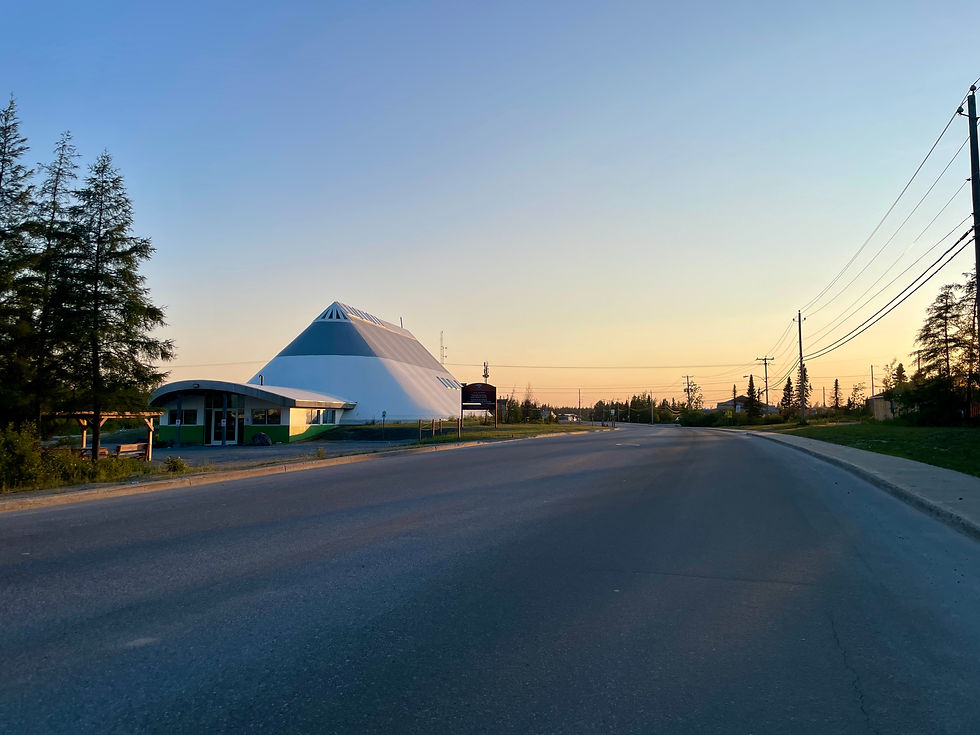
In the afternoon, Chris and I visited the Chisasibi Cultural Heritage Centre. We learned about the history of Fort George and the relocation of the community to Chisasibi, including how entire buildings were transported across the river by boat. We spoke with women sewing mini moccasins from hide, who showed us an outfit prepared for a child’s walking-out ceremony. They mentioned a snowshoe-making workshop planned for the following week. Even there, someone took the opportunity to ask me about a child’s allergy.
We decided to cook the caribou but had no clear idea how to prepare it. We stopped by Cree Mart for broth and made a simple stew with vegetables, along with fried rice from leftovers.
That evening, I went to a Christian youth rally at the Mitchuap Building that Eileen had encouraged me to attend. I arrived a little late, but the auditorium was already full, chairs pulled out toward the back. A worship band played song after song, mostly in English, with speeches in Cree between them.
I did not know anyone in the room. I did not speak Cree. I had spent most of the week inside a trailer, moving from patient to patient. And yet, standing there among people I had never met, I felt received and welcomed.
Saturday, February 28, 2026
Chris made crêpes and coffee to share with a dietetics student we had met at the motel. We sat around the small table and talked about traditional foods and about her experiences working in the community. It was an unhurried morning. After breakfast we packed and checked out of the hotel.
We had planned to drive to James Bay, but visibility was poor and the wind was harsh. Valerie had originally offered her car but cautioned that it would be unsafe. Even the security guard advised against it. Instead, we went to the arena, where the annual senior hockey tournament was underway. Walking in, we bumped into Eileen, who had only returned home at one in the morning and was back again to cheer for the Mistissini Chummies.
When she learned we still hoped to see the bay, she offered to take us. Soon we were in her pickup truck, driving through blowing snow toward the water.
As we drove, she spoke about Fort George, the island where the community lived before Chisasibi was established. The ferry still runs between the island and the mainland, carrying vehicles so families can tend cabins, hunt, and gather. Some keep older trucks on the island so they can move around once they cross. Hunting follows migration and season, and meat is divided among families. Celebrations begin with prayer. The land carries memory.

At the water’s edge, the wind cut sharply across the bay. Even at -26°C, it felt much colder. Visibility was minimal. We stood only briefly before returning to the truck.
On the drive back, Chris mentioned wanting to try poutine at the Mitchuap building, just to say we had eaten somewhere local. Eileen laughed and said she had something better. At her home, a shepherd’s pie made with caribou was waiting in the oven. She told her husband she had cooked plenty but had only two guests. She insisted we take as much as we wanted.
At one in the afternoon her team took the ice. The arena was full. I bought a piece of bannock to enjoy while we watched. It felt less about winning and more about being together.
Later, as we bundled ourselves against the wind, Valerie pulled up to drive us to the airport. She handed us homemade muffins for the journey.
We said our goodbyes for now and headed into the terminal.



Hi! Always great to read you. Thank You for writing about your journey and the special services you give. It’s so funny Michelle… this morning I started my day playing in loop Hallelujah the song we played together in Tasiujaq before your delayed flight. We all had a lovely time together… 💚